Running a factory floor means tackling a different challenge every day, from unexpected production disruptions to some of the highest staff turnover percentages across industries. In fact, the Manufacturing Institute projects that 2.1 million manufacturing jobs could go unfilled by 2030. Each unfilled position slows production, and over time, that erodes business performance.
Automated systems in factories help address some of these challenges, and their availability grows each year for small- and mid-size manufacturers. This means industrial automation is no longer exclusive to large-scale operations, and its democratization is leveling the playing field for smaller players facing the same productivity pressures.
For many, the only remaining question is where to start. A common place to do so is at the end of the line, with automated palletizing.
What is Automated Palletizing?
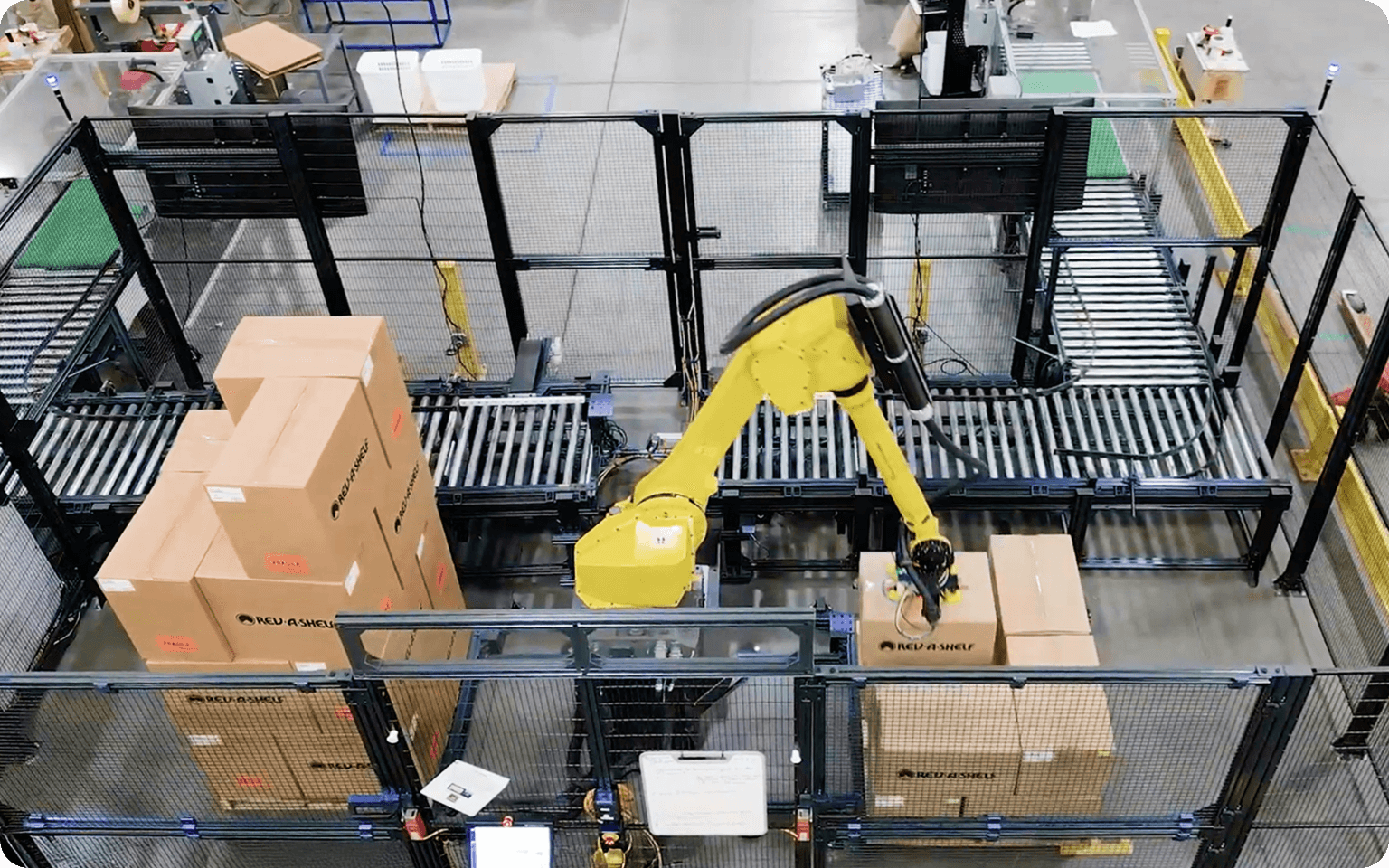
Compared to manual palletizing, where a human worker sorts and stacks packages onto pallets, automated palletizing relies on autonomous robots to do that work.
Palletizing is one of the most popular production processes to automate first. It’s easy to configure and offers straightforward ROI, making it an accessible entry point toward fully automated production lines.
Here’s what to expect when you automate palletizing on the factory floor.
5 Things that change when you automate the factory floor
1. Injury Risk Drops to Zero
Palletizing is hard labor. Constant bending, twisting, and repetitive package lifting results in frequent worker injuries. This is a lose-lose situation: it affects workers’ long-term health and impacts the business by slowing production and driving staff turnover.
Robotic failures are far less frequent and easy to tackle when they happen. Instead of tending to an injured worker, absorbing time off, and retraining a replacement, teams typically resolve a system fault with a quick troubleshoot, reboot, or call with support.
2. Turnover Stops Being a Production Risk
According to The Resource, manufacturing jobs have ranked among the most unstable in recent years. Average annual turnover runs 30% to 38%, with a 90-day turnover average of 15% to 22% for general production workers, making disruptions frequent and retraining slow. Even the most stable manual floors are limited by required breaks, time off, and reasonable working hours.
Automated floors mitigate these risks. Robotic systems don’t face illness, injury, or require vacation. They will keep working for as long as they’re switched on, allowing human workers to focus on higher-level tasks like growth and creative problem-solving.
3. Uptime Becomes Predictable
Robotic palletizers are one of the most reliable and proven robotic applications in manufacturing. According to Vention’s Palletizer Buyer’s Guide, automated palletizers reach 99% uptime and can expect to maintain that rate by following recommended preventative maintenance schedules.
Predictable uptime lays the groundwork for repeatable systems, minimizing risk as production grows.
4. The Cost Conversation Shifts from Wages to Ownership
Wages and hiring costs make up the bulk of overhead spending at manual manufacturing plants, which have historically made the case for automation. Switching to robots, however, isn’t necessarily a one-time spend.
Ownership comes with its own costs, the same way it does with a vehicle fleet or any other piece of equipment. Factory managers running automated floors need to budget for utilities and quarterly maintenance.
The cost of ownership, however, is significantly lower than wages, and it comes with a more predictable path to ROI, typically landing between 18 and 24 months.
5. Scaling Is Simplified
By using standardized, proven automation systems, manufacturers can easily repeat and expand configurations across growing production lines.
Opening a new line or a new plant no longer takes guesswork. Automation lets manufacturers minimize variables and knowledge loss from turnover, jumping instead to full-speed production.
As success becomes repeatable, scale becomes simple.
A Gateway to Full Automation
Automated palletizing is a low-risk entry point for manufacturers beginning the transition to fully automated floors. Over time, the benefits compound, making room for other automated systems that drive long-term business growth.
To learn more about how automated palletizers work, read our Complete Guide to Palletizer Automation for Manufacturing.